Zizobet
zizobet.com
- Payout time
- 3 banking days
- Min. deposit
- €10

Understand offshore casinos through their platforms, account records, payment stages and cryptocurrency terminology.
Explore offshore casino service models, game formats, payment terms and account features in the guide below.
zizobet.com

rolletto.com

cosmobet.com

velobet.com

dudespin.com

smash.casino

dragonia.com

gambiva.com

robocat.com

luckydreams.com
Offshore casinos bring together online services with different business structures, game catalogues and account arrangements. The label can describe where a company is based or the licensing framework associated with its service. It tells readers something about the business background, but little about how the website presents games, records payments or supports an account.
For people researching offshore casinos in Estonia, those practical features deserve their own explanation. An international brand can combine familiar software with distinctive currency settings, support hours and account tools. This guide explores that service experience, with related casino groups covered in separate guides on their payment information, account terms and player controls.
“Offshore” is a broad description rather than a single type of casino. It commonly refers to a service associated with a jurisdiction outside its principal customer market, often outside the EU. The meaning depends on the context: incorporation, operating arrangements and licensing are different aspects of a business.
Offshore casinos can present themselves through one international website or a group of related brands. Some organize their content around several languages; others use one main language while addressing an international audience.
It also does not establish a shared standard of account functionality. Two websites described as offshore may have substantially different help resources, transaction records and privacy settings. Their published service information provides a more useful starting point for understanding those differences than a geographic description alone.
The name on a casino homepage is a brand. Behind that name, an operating business may use technology supplied by other companies for the game lobby, account system or customer communications. These relationships help explain why unrelated-looking websites sometimes share familiar layouts and functions.
A platform is the underlying software environment that connects those functions. It can support more than one brand, while each brand uses its own design, content or service arrangements. The developer's name within a title is therefore not necessarily the name of the business managing the casino account.
Shared technology does not establish identical terms or account relationships. A familiar login layout cannot show that balances, settings or support conversations carry across two websites. A clear service description distinguishes the visible brand, the responsible operator and the technology involved without assuming they are one organization.
An offshore casino library can contain slots, digital table games, live rooms and other formats. The organization of that library influences how understandable the catalogue is. Category labels, supplier pages and title information explain different parts of the selection, while a single total offers only a rough measure of its size.
A title may appear in several collections without representing several distinct games. Live tables can also be counted individually even when they belong to one broader format. Comparisons become clearer when they explain what a published catalogue count includes.
The surrounding information matters as much as the catalogue structure. Game rules, provider identification and format descriptions give context to the thumbnails displayed in the lobby. Their location should remain understandable when the website changes from a desktop layout to a smaller mobile screen. A broad library does not by itself establish clearer information or more favorable financial outcomes.
Live casino content combines a video feed with software controls and account information. Different rooms can vary in presentation language, schedule and screen layout. The visual setting may be prominent, but the practical description concerns how the video, rules and status information fit together.
On smaller screens, an interface may rearrange or hide panels to preserve space. That makes the presentation of connection messages, sound controls and game information relevant to an overview. A video image alone does not explain whether the associated text remains readable.
Digital table games use software presentation without the same live studio feed. Their animations and controls can have a different rhythm, and the relevant rules should remain accessible within that interface. These are distinctions between formats, not evidence that one provides predictable returns.
An offshore service may use English as a common language while offering additional translations. The translation can extend to the lobby without covering every account message or help article. Language coverage is therefore better described through the actual parts of the service than through a total number of languages.
Terminology also affects clarity. A balance adjustment, a pending request and a completed payment should have recognizable descriptions across the account and help centre. When those labels change between languages, accompanying explanations can prevent the reader from mistaking a translation difference for a different transaction state.
Time references deserve similar attention. Support hours, account events and payment updates may use different time zones. A dated record with a stated zone is easier to interpret than a message saying only “today.” Consistent formatting matters for an international service whose customers and support teams may be in different working days.
Fiat currency means conventional money such as euros. Cryptocurrency refers to digital assets that can be used in some payment or account arrangements. These terms describe how value is represented or transferred; they do not identify one particular operating model.
A cryptocurrency payment option does not necessarily mean that the casino balance is denominated in cryptocurrency. A service may describe incoming assets, the internal account balance and the amount shown in a game using different units. Where conversion is involved, the explanation should make those stages distinguishable.
The phrase “crypto casinos in Estonia” usually concerns this payment or account terminology. It does not identify a separate universal casino license or establish local authorization. It also does not mean that identity information will never be requested.
An external transaction record and an internal casino entry serve different purposes. The external record can describe a transfer, while the account history describes the operator's treatment of it. Neither alone explains every balance adjustment. Clear terminology connects the records without suggesting that a payment technology removes the need for understandable account terms.
Currency information belongs alongside the account balance and transaction history. A symbol without a currency code can be ambiguous, especially on a service addressing several markets. The account denomination, payment denomination and any display conversion should be stated clearly enough to remain understandable in later records.
Payment descriptions also need to distinguish requests from completed movements of money. A published processing time can refer to an internal review, a transfer being initiated or an external payment being received. Those stages should not be combined into one unexplained promise.
Charges and conversion information are equally specific. A figure may depend on the method, asset, currency or transaction direction. A useful service overview records those conditions rather than treating one advertised number as applicable to every account. Availability and terms can change, so the description should keep its scope and date visible.
The casino record describes the amount credited or debited, its currency, the recorded status and any related account adjustment.
A bank, payment service or digital-asset transaction can have its own amount, reference and timing. That record may describe a different stage of the same payment.
A balance is a snapshot. Transaction history explains how the account arrived there. Useful records distinguish payments, game-related entries, reversals and other adjustments through readable descriptions rather than relying on an unexplained positive or negative number.
Status labels need definitions too. “Pending,” “processed” and “completed” can refer to different events depending on the system. The help centre should explain the terminology used in the actual account, including whether a timestamp refers to submission or a later update.
Access to older records matters when a conversation continues over several days. A downloadable statement, an account history page or a dated support message can each present information differently. A service comparison can describe which records are available and how much detail they contain without assuming that every platform offers the same export tools or retention period.
International customer support can involve chat, email, an account inbox and published help articles. The channels should connect sensibly: an account-specific response may need more detail than a general article, while an automatic acknowledgment only confirms that a message has entered a system.
Continuity is especially relevant when staff work across time zones. A conversation reference and dated message history help explain what has already been discussed. Clear handovers avoid leaving each reply detached from the earlier account context.
Support descriptions should distinguish published availability from actual response commitments. A chat widget can remain visible while staffed assistance follows a timetable. Likewise, multilingual navigation does not establish that each language is available through every support channel.
Account security concerns access to the service. Password settings, additional authentication and session information are examples of functions a platform may provide. An overview should describe the features actually documented for the service rather than assume that all offshore casinos share a particular security package.
Identity requests have a different purpose. Often described as KYC, or “know your customer,” they concern information associated with the account holder. A brief registration form is not a complete statement of later requirements. Clear documentation explains requests, their submission channel and how their status is communicated.
Privacy information concerns the handling of personal data. It should identify the responsible business and explain its stated practices in readable language. Marketing preferences, identity documents and login controls are related to the same account but perform separate functions. A polished interface is useful for navigation; it does not independently substantiate every security or privacy claim made about the service.
Account controls can cover spending or time limits, temporary pauses, communication preferences and closure. Each needs an explanation of its effect. A confirmation should make clear which action was requested, when it applies and which account or service it concerns.
The reach of a control should remain explicit. A setting on one brand should not be assumed to cover every website using the same software or belonging to a wider business group. The service's own explanation determines what the interface is describing.
On mobile, these functions need to remain accessible alongside the game catalogue. Readable text, labelled buttons and understandable form errors are more informative qualities than the presence of an app alone. A browser interface and an installed app can organize the same functions differently; a balanced description addresses access to records, support and controls in each available version.
A useful comparison of the best offshore casinos explains the features behind each conclusion. A large library, multilingual homepage or recognizable payment symbol describes one feature. None provides a complete assessment of the account service.
The following table keeps the comparison organized around concrete information. It offers a common vocabulary for describing services, without assigning unsupported ratings or recommending operators.
| Service area | What the comparison describes | Useful distinction |
|---|---|---|
| Business structure | Brand, operator and published platform information | Shared technology versus a shared account relationship |
| Game library | Formats, categories and title information | Catalogue totals versus distinct content |
| Language | Interface, account messages and support coverage | Translation versus staffed assistance |
| Currency | Balance units, payment units and conversion terms | Displayed value versus recorded account value |
| Payments | Conditions, charges and processing stages | A submitted request versus an external transfer |
| Records | History, status definitions and available statements | A current balance versus its transaction history |
| Account controls | Security settings, limits and closure information | One account's setting versus a broader service arrangement |
An offshore casino can change its underlying platform without changing its public brand. The layout, terminology or location of an account function may then change. A description of the service should distinguish the current interface from an earlier version, particularly where historical statements retain the older names for transaction stages.
A platform change also raises practical questions about records. The published explanation can state where earlier messages and statements remain available, which references identify them and whether the current account view includes historical entries. A familiar logo alone cannot answer those questions. Equally, a changed colour scheme does not establish that the underlying account system has changed.
This keeps the service profile tied to identifiable account functions. It explains continuity through transaction references, dated messages and the scope of the current interface, instead of assuming that related brands share balances, settings or records merely because their screens look similar.
The platform, the game supplier and the business operating an account have different roles. A description of shared software does not establish a shared customer relationship. The CGA's published framework also distinguishes operator and supplier licensing; those roles should remain separate when explaining which business performs a particular function.
Our Curaçao casinos guide covers that specific casino group. The Estonian casinos guide covers local services. EMTA explains that foreign authorization does not itself grant permission to offer gambling in Estonia. A platform's language, payment options and technical accessibility do not settle that separate question.
CGA online gaming framework and EMTA gambling permit guidance.
This documentary profile uses the brand's public pages and published terms. It describes the service without claiming firsthand play or withdrawal testing. Its inclusion does not confirm authorization for any particular market.
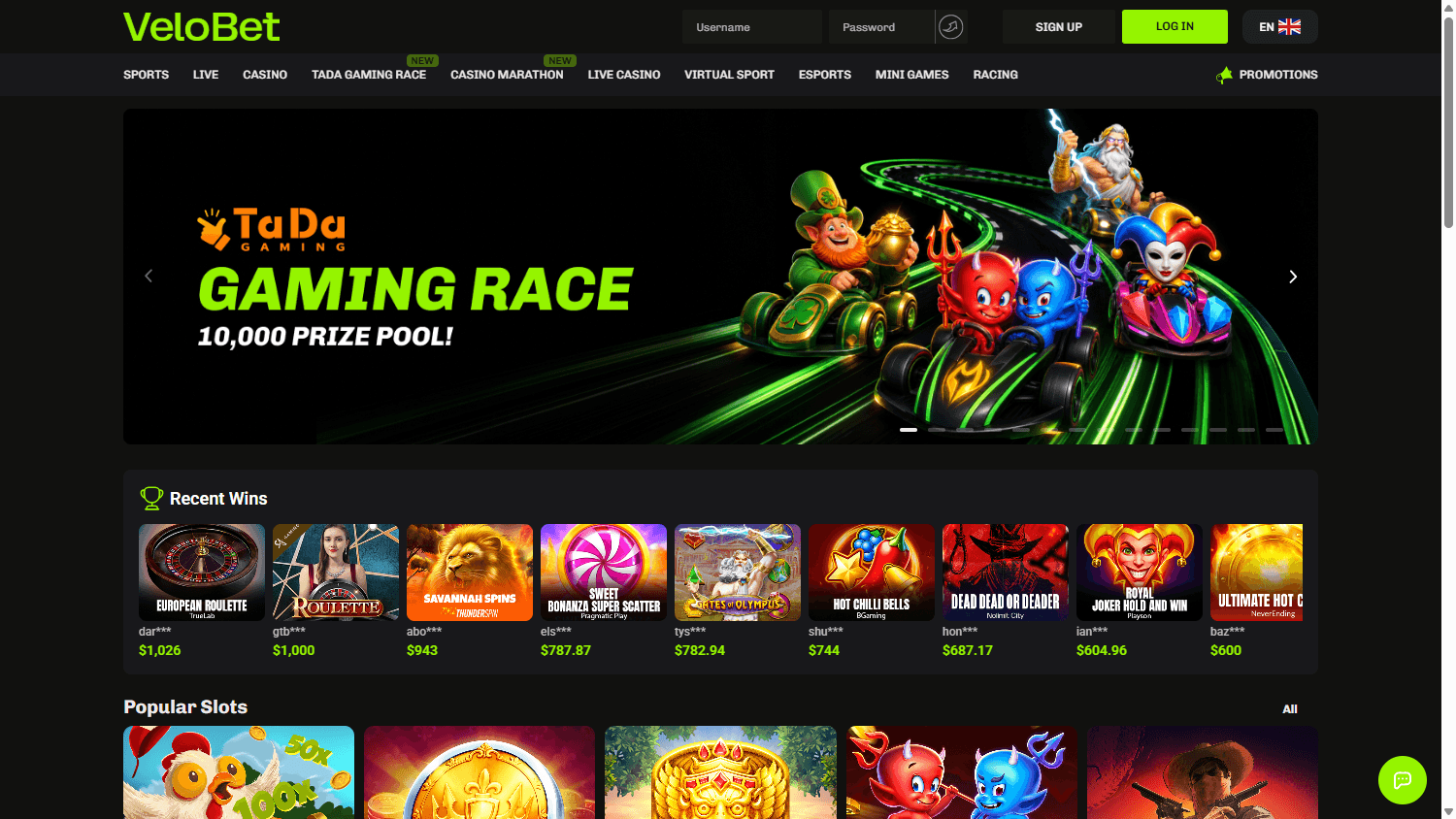
Velobet separates casino, live casino, mini-games and sports into distinct sections. Its published account currencies include ordinary currencies and several cryptoassets, making the difference between a payment method and the unit of the account balance particularly relevant. The terms name Visa and Mastercard alongside alternative methods, while directing country-specific availability questions to support.
The stated minimum deposit and withdrawal is €10 or its equivalent. Payments must come from a method registered in the account holder's own name. The terms describe withdrawal processing within three banking days, subject to identity checks and other account conditions. They also distinguish withdrawal limits from minimum amounts. These are published service conditions, not measured performance results. A cryptocurrency entry in the currency list does not remove verification requirements or establish that every listed payment option is available to every customer.
Velobet public website and Velobet account and payment terms.


The term broadly describes casino services connected with jurisdictions outside their principal customer market, often outside the EU. It can concern the operating business or its licensing background, so it needs context.
Yes. Related interfaces can reflect shared software. That does not establish that the brands share balances, account settings, terms or customer-support arrangements.
Not necessarily. The payment asset, internal balance and game display can use different units. The account and payment explanations should identify any conversion between them.
A total can include separate titles, versions of a title or individual live tables. Catalogue organization and counting methods help explain what the figure represents.
They can describe different stages: a request processed within the casino account and a transfer recorded by an external provider or network. Time zones can also differ. The meaning of each status and its time reference is needed to understand the records; a single completion label does not explain the whole process.